RECORD_008 // LOST_AT_SEA
[ 05.14.24 ][ VISUAL_INTERCEPT // COMPOSITE_ARTIFACT ]48.9 MHz
[ START_OF_RECOVERED_FILE ]
[ END_OF_RECOVERED_FILE ]
[ SYSTEM_NOTICE: STILL_FRAME_LOCKED // DISTRESS_PATTERN_DETECTED ]
[ DATA_BLOCK_01: SIGNAL_COMPOSITION ]
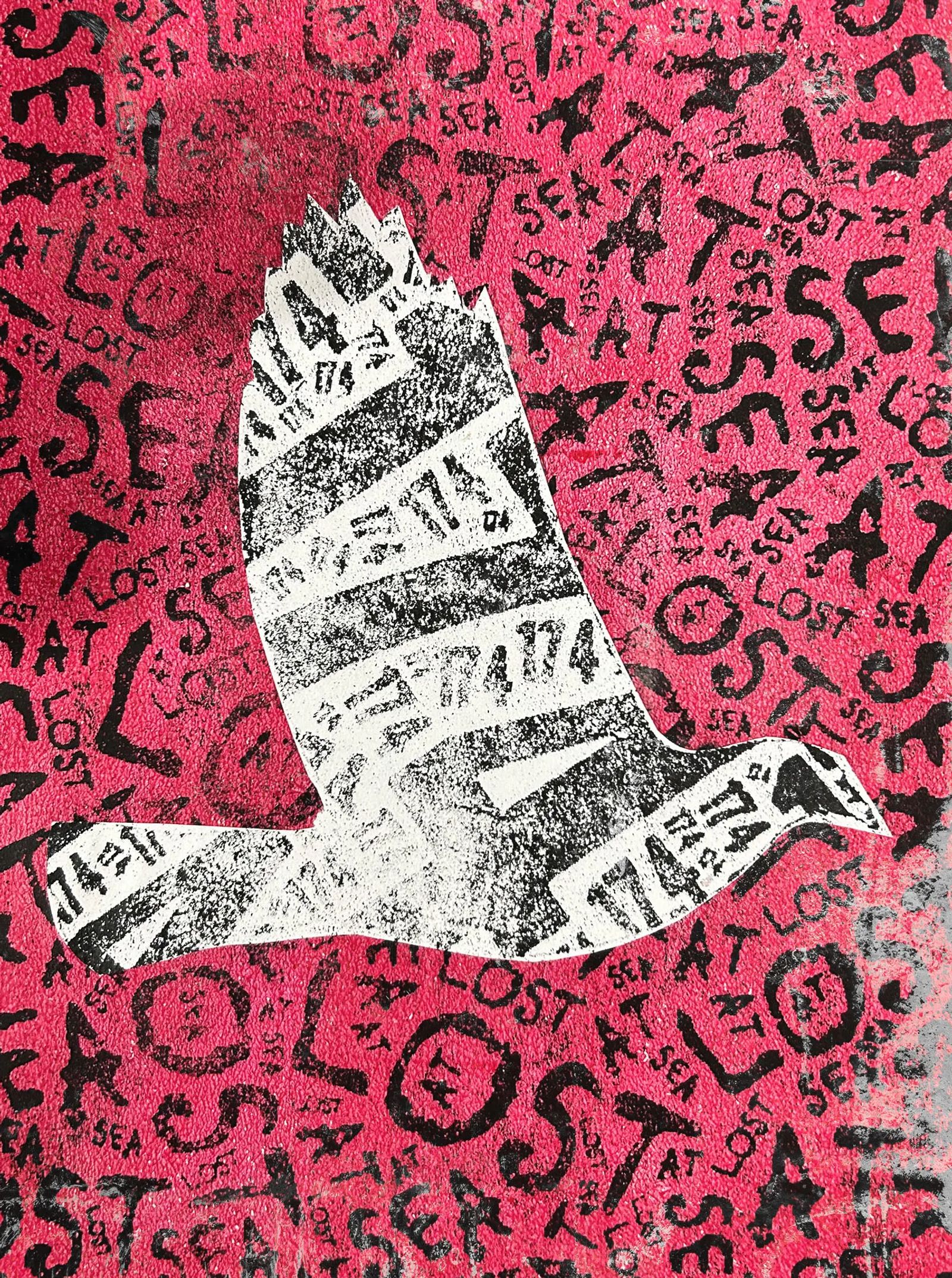
Analysis of the visual feed reveals a dual-layered physical composite rather than a standard digital image. The primary substrate appears to be a transferred chemical emulsion—a dense crimson base saturated with chaotic, fragmented typography. A secondary element, an avian silhouette extracted from a completely separate, high-contrast monochrome data plate, has been physically grafted over the primary feed. It is a deliberate, analog fusion of two distinct visual frequencies.
[ DATA_BLOCK_02: TEXTURE_ANALYSIS ]
Topographical scans indicate tangible depth between the layers. The foreground anomaly (the spliced avian figure) exhibits a harsh, static-like black-and-white texture. This contrasts sharply with the distressed, oxidized red of the ground layer. The physical act of cutting and adhering the silhouette suggests a manual override of the original data stream. The background acts as a localized noise floor, anchoring the composition while the grafted figure remains suspended in a state of static flight.
[ DATA_BLOCK_03: OBSERVATION_LOG ]
The file remains locked as a static artifact. While early automated sweeps misidentified the background as meaningless noise, manual filtering confirms the crimson substrate is heavily stamped with a recurring manual sequence: "LOST AT SEA." The imposition of the severed avian form over this repeating distress code creates a jarring psychological dissonance. It is undetermined whether this artifact is a genuine cry for extraction from an external source, or a corrupted reflection of the station's own internal isolation.
[ END_OF_TRANSMISSION ]